Hometown Builders Unlimited Publishes Summer Shade Design Guidance
SLINGER, WI - September 08, 2026 - PRESSADVANTAGE - Hometown Builders Unlimited has published seasonal shade guidance
Press Release Disclaimer: This is a press release distributed through the XPR Media network. It has not been independently verified by our newsroom.

SLINGER, WI – September 08, 2026 – PRESSADVANTAGE –
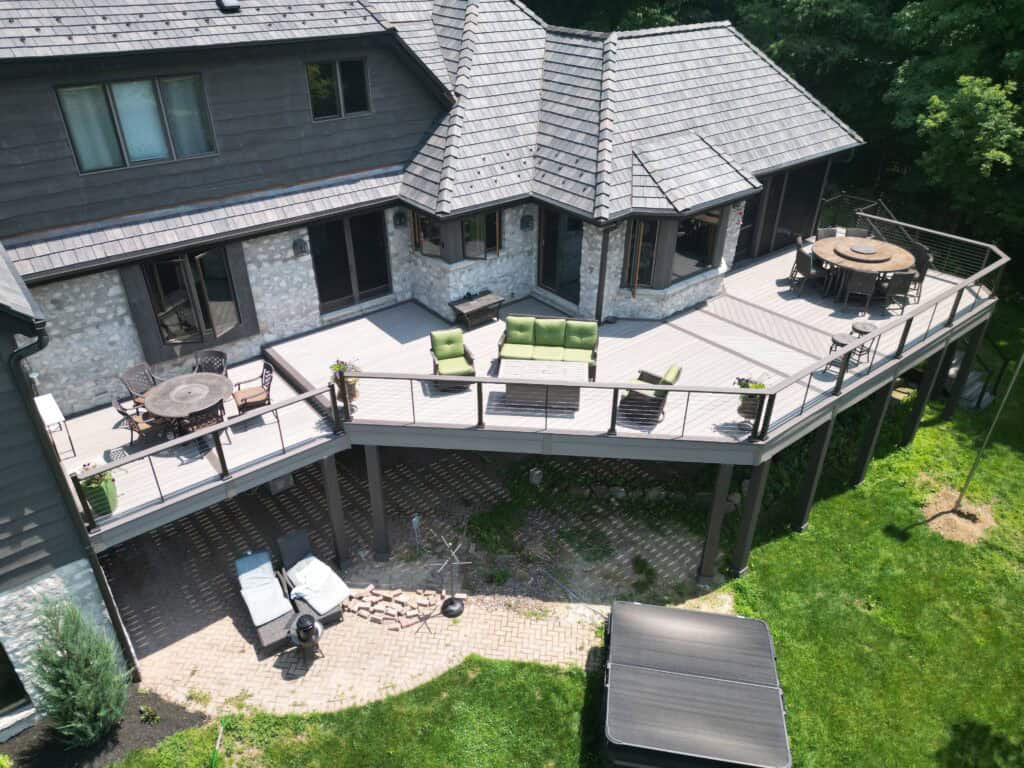
Hometown Builders Unlimited has published seasonal shade guidance for homeowners whose decks and outdoor living spaces go largely unused during the hottest weeks of summer. The guidance examines how orientation, overhead cover and surrounding conditions affect the number of usable hours an outdoor space delivers across a Wisconsin season.
The Wisconsin State Climatology Office puts the state’s average summer temperature at 67 degrees, with average high temperatures approaching 85 degrees in southern portions of the state and average lows ranging from 55 to 65 degrees in southern and central counties. Southeastern Wisconsin sits at the warmer end of that range.
National Weather Service records for the Milwaukee area track daily maximum temperatures and cooling degree days through the season. Those records give homeowners a season-by-season account of how often conditions reach the range where unshaded surfaces become uncomfortable, and how that pattern differs from one summer to the next.
Sun angle changes steadily from the June solstice onward, and the shift is easy to overlook because it happens gradually. A section of deck that sits in shade at five in the afternoon in June can be in full sun at the same hour in late August, because the sun sits lower in the sky and light reaches further beneath a fixed overhang.
South-facing and west-facing exposures receive the longest periods of direct sunlight during summer months. West-facing surfaces absorb the low-angle afternoon sun that arrives during the hours when many households are most likely to be outdoors, which is why two similar decks on the same property can perform differently.
“Most homeowners think about shade as a matter of taste, and it is really a matter of hours,” said Tyler Anders, Owner and Founder of Hometown Builders Unlimited. “Two decks with identical layouts on opposite sides of the same house will not be usable at the same times of day. That difference is far easier to design around at the planning stage than to correct once a structure is built.”
The company reviews orientation during design development using 3D modeling, examining how shadow patterns fall across each section of a deck at different hours and at different points in the season. Elevation affects the outcome as well, since a raised deck clears fences and low hedges that would otherwise cast afternoon shade.
Mature tree cover complicates the picture further. The shade a canopy provides in August has largely gone by late October, which means a space that depends on it loses protection in the shoulder season rather than in midsummer.
Shade options run along a spectrum from partial overhead cover through to full enclosure, and the appropriate point on that spectrum depends on how many months of the year the space needs to function. Pergolas provide overhead structure while leaving the sides open to airflow and to views of the surrounding yard.
Louvered systems allow the amount of overhead light to be adjusted through the course of a day rather than fixed permanently at the time of installation. That suits climates where mornings and evenings are comfortable while midday conditions are not.
Covered porches provide a solid roof and consistent overhead protection regardless of sun angle or time of day. Screened porches enclose the sides while maintaining airflow, which addresses insect pressure during the late-summer weeks when evenings would otherwise be the most comfortable hours available.
Three season rooms and porch enclosures close the space further, extending usability into the shoulder seasons at both ends of a Wisconsin summer. The tradeoff is that each step toward full enclosure moves the space further from an open deck and closer to a room.
Surface material also affects how an outdoor space feels underfoot, since darker surfaces absorb more solar energy than lighter ones over the course of an afternoon. Composite and PVC boards are produced across a range of colors, and board selection can be matched to the sun exposure a given section of a deck receives rather than applied uniformly across the whole structure.
Lighting placement extends the usable window in the other direction. Much of the comfortable outdoor time in July and August falls after sunset, and step and railing lighting determine whether a space stays in use once the light goes.
“The first question worth asking is how many months of the year the space actually needs to work,” Anders said. “That answer points toward the right amount of cover far more directly than any conversation about style, and it tends to make the rest of the design decisions straightforward.”
The guidance also addresses the sequencing of shade decisions within a broader project. Overhead structures interact with framing, footing placement and drainage, which means retrofitting cover onto a completed deck is generally more involved than incorporating it into the original design.
Homeowners planning a build are advised to establish shade requirements alongside layout and material decisions rather than treating cover as a later addition. The published guidance is available on the company website.
Hometown Builders Unlimited is a family-owned and firefighter-owned deck builder founded in April 2019, operating as Hometown Deck Builders. The company designs and builds custom composite and PVC decks, pergolas, covered and screened porches, three season rooms and outdoor living spaces for homeowners across southeastern Wisconsin.
###
For more information about Hometown Deck Builders, contact the company here:
Hometown Deck Builders
Tyler Anders
+12622981182
hometownbuildersmke@gmail.com
255 Info Hwy, Slinger, WI 53086, United States