AndaSeat Labor Day 2026 Highlights MANA Series as Shared-Desk Strategies Return to Workplace Planning
AndaSeat Labor Day 2026 Highlights MANA Series as Shared-Desk Strategies Return to Workplace Planning SPOKANE, WA,
Press Release Disclaimer: This is a press release distributed through the XPR Media network. It has not been independently verified by our newsroom.

AndaSeat Labor Day 2026 Highlights MANA Series as Shared-Desk Strategies Return to Workplace Planning
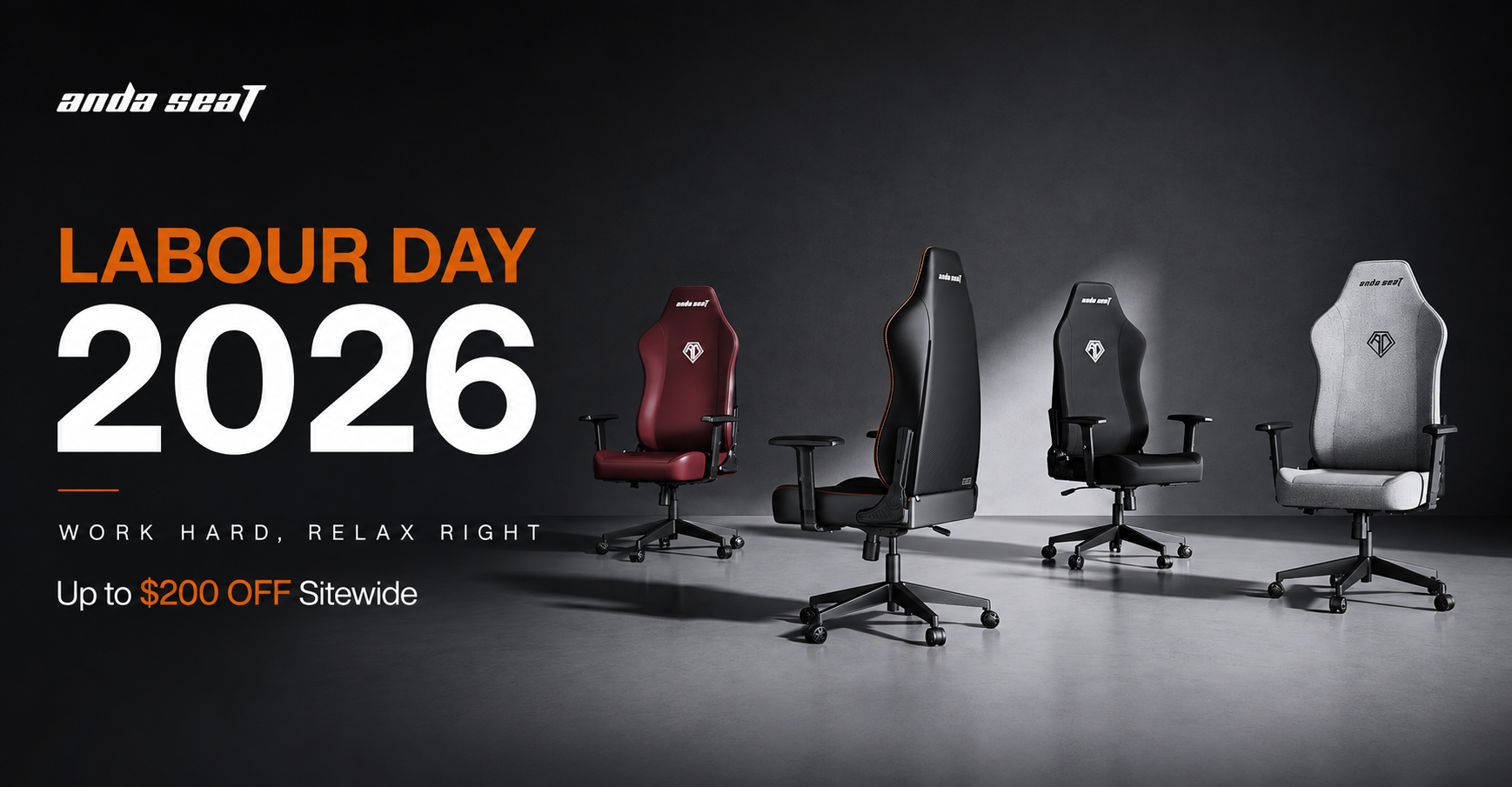
SPOKANE, WA, UNITED STATES, September 3, 2026 /EINPresswire.com/ — AndaSeat is highlighting its MANA Series professional gaming and office chair during its 2026 Labor Day campaign as current workplace-planning discussions bring renewed attention to shared workstations and the furniture used within them.
Office utilization has become a visible issue in 2026. In March, the U.S. General Services Administration released the first government-wide data required under the USE IT Act, which established a 60% utilization benchmark for covered federal workspace. GSA said the findings would support decisions involving space consolidation, co-location and more efficient allocation of office space.
In July, the U.S. Government Accountability Office reported that 89% of the Department of Transportation office buildings it reviewed did not meet the utilization threshold during the period studied. Among the strategies GAO identified for improving space efficiency was desk sharing supported by desk-reservation systems.
Those findings concern federal real estate rather than commercial offices or AndaSeat products. They nevertheless illustrate a workplace-design issue with broader relevance: when more employees share fewer assigned workstations, furniture may need to accommodate repeated setup rather than remain permanently tuned to one user.
Shared Desks Turn Chair Adjustment Into a Repeated Task
A permanently assigned chair can remain close to one user’s preferred settings for months.
A shared chair works differently.
The next person may need a different seat height, arm position or backrest relationship. If those controls are difficult to identify or the chair depends heavily on loose accessories for its basic support shape, the user may either spend time rebuilding the setup or simply work with settings left by the previous occupant.
The Canadian Centre for Occupational Health and Safety states that workstation adjustment needs to reflect the individual using it and advises users to make minor adjustments whenever they sit at a workstation that is not their own. Its chair guidance also emphasizes controls that are easy to operate from the seated position.
OSHA similarly notes that increased chair adjustability is particularly important when a chair has multiple users and recommends coordinating chair settings with the monitor, keyboard and desk.
For MANA, AndaSeat has taken a relatively direct approach to those everyday controls rather than building the chair around a large number of independent mechanisms.
Integrated Lumbar Structure Establishes a Baseline Before Accessories
MANA incorporates an approximately 1.77-inch, or 45 mm, lumbar curve directly into the backrest structure.
This matters differently in a shared or frequently reassigned environment than it does in a dedicated personal setup.
A loose lumbar pillow can be useful for fine adjustment, but its position depends on where the previous user left it. By integrating the primary lower-back contour into the chair itself, MANA establishes a consistent starting shape before optional pillows are added.
The included lumbar pillow can still provide additional contact for users who prefer it, while the built-in structure remains available when the pillow is moved or removed.
This does not mean the same lumbar profile will suit every body. CCOHS specifically cautions that a chair only becomes ergonomic when its dimensions and controls suit the individual user, workstation and task.
MANA is therefore intended for its stated user range rather than as a universal shared chair. Within that range, the integrated lumbar architecture reduces one variable that otherwise has to be recreated each time someone sits down.
Straightforward Controls Make the Reset Process More Legible
MANA provides a 10 cm seat-height adjustment range and vertically adjustable armrests with approximately 10 cm of movement.
The backrest reclines from 90 to 135 degrees and includes a 15-degree rocking mode with adjustable resistance.
These controls cover four distinct setup questions: how high the user sits relative to the desk, where the forearms receive support, whether the backrest remains more upright or reclined, and how much rocking resistance is preferred.
The product does not attempt to provide the multidirectional armrest and lumbar mechanisms found on AndaSeat’s higher-tier models.
In the context of this release, that simpler control architecture is deliberate. A shared workstation has limited value if users cannot quickly understand which controls need to change.
CCOHS advises that office-chair controls should be operable from the sitting position and that workers need to know how to readjust their workstation throughout the day according to their own needs.
MANA’s approach is to keep the primary setup sequence relatively clear: establish seat height, align arm support, choose the backrest position, and then add or remove the included pillows according to preference.
Foam and Frame Matter When One Chair Sees Repeated Use
Shared use also changes the importance of the parts that cannot be reset with a lever.
MANA uses 60 kg/m³ cold-cure foam in its seat. Unlike adjustment controls, foam density is fixed when the chair is manufactured. It therefore forms part of the baseline experience regardless of which user sits down.
AndaSeat positions the molded foam around a firm-but-cushioned seating feel and resistance to early compression rather than around a guarantee of permanent shape retention.
The chair also uses a reinforced steel internal frame and an SGS-certified Class 4 gas lift. Its stated maximum capacity is 136 kg, or 299 pounds, within the product’s intended use parameters.
These specifications address a different side of flexible-workspace furniture: the mechanisms and internal components may be exposed to repeated height changes, reclining movements and daily transitions among users.
They should not be interpreted as a promise of unlimited service life. Their relevance is that the structural components are disclosed rather than left behind general descriptions such as “professional grade” or “heavy duty.”
Surface Choice Addresses Different Shared-Space Priorities
MANA is offered in DuraXtra PVC leather and EverSoft linen configurations.
The PVC option provides a wipeable surface that may suit spaces where routine cleaning is a priority. The linen version provides a textile alternative for users who prefer a softer surface and more residential visual character.
The upholstery choice does not change the chair’s central foam, frame, lumbar structure or primary controls.
This distinction is useful in flexible environments because material and mechanical fit are separate decisions. An organization or household may prioritize surface maintenance, visual appearance or tactile preference without changing the basic adjustment model underneath.
The chair also uses 60 mm polyurethane-coated casters and a five-point nylon base, providing mobility around a workstation without adding another user-operated mechanism.
Shared Workspace Planning Still Requires Individual Fit
The renewed interest in desk sharing should not be interpreted as evidence that one chair can suit an unlimited number of users.
That would conflict with basic ergonomic guidance.
CCOHS states that there is no practical one-size solution and that chair selection must account for body dimensions, workstation characteristics and actual tasks. OSHA likewise emphasizes adequate back, leg, arm and seat support and notes that adjustability becomes especially important when multiple people use the same chair.
The practical implication is that shared-workspace efficiency and ergonomic fit must be considered together.
The 2026 GSA and GAO reports focus on office-space utilization, real-estate costs and the use of strategies such as co-location and desk reservation. They do not prescribe MANA or any particular chair.
AndaSeat’s MANA Series addresses a narrower part of that discussion: if a workstation is expected to be used repeatedly rather than permanently assigned, the seating should provide an understandable setup process, a consistent structural starting point and clearly stated user limits.
Labor Day Puts the User Back Into the Space-Efficiency Discussion
Office consolidation is often discussed in terms of square footage, occupancy percentages and cost.
Labor Day provides a different lens.
A more efficiently used workplace still has to work at the scale of the individual person who sits down at the desk. Space efficiency can determine how many workstations exist; furniture design determines how those workstations meet the people using them.
MANA’s role in that environment is intentionally focused. The integrated lumbar contour creates a repeatable starting point. Seat and armrest height provide the principal user adjustments. Cold-cure foam and the internal steel frame form the fixed support structure beneath those controls.
The chair cannot determine whether an employer should adopt desk sharing or whether a particular flexible-office model is appropriate. Its contribution is more specific: reducing unnecessary complexity when a workstation must be adjusted again.
About AndaSeat
Founded in 2007, AndaSeat develops ergonomic seating and workspace products for gaming, professional and home environments. Its portfolio includes ergonomic chairs, standing desks, monitor arms and related workspace accessories. The company’s product-development approach combines structural engineering, material design, adjustable support and practical workspace requirements across personal and shared-use environments.
AndaSeat Marketing
AndaSeat
email us here
Visit us on social media:
LinkedIn
Instagram
Facebook
YouTube
TikTok
X
Legal Disclaimer:
EIN Presswire provides this news content “as is” without warranty of any kind. We do not accept any responsibility or liability
for the accuracy, content, images, videos, licenses, completeness, legality, or reliability of the information contained in this
article. If you have any complaints or copyright issues related to this article, kindly contact the author above.

Media gallery