Flagstaff Celebrates 25th Anniversary as the World’s First International Dark Sky City
The 2001 designation launched the International Dark Sky Places program, which now protects 277 places on six
Press Release Disclaimer: This is a press release distributed through the XPR Media network. It has not been independently verified by our newsroom.
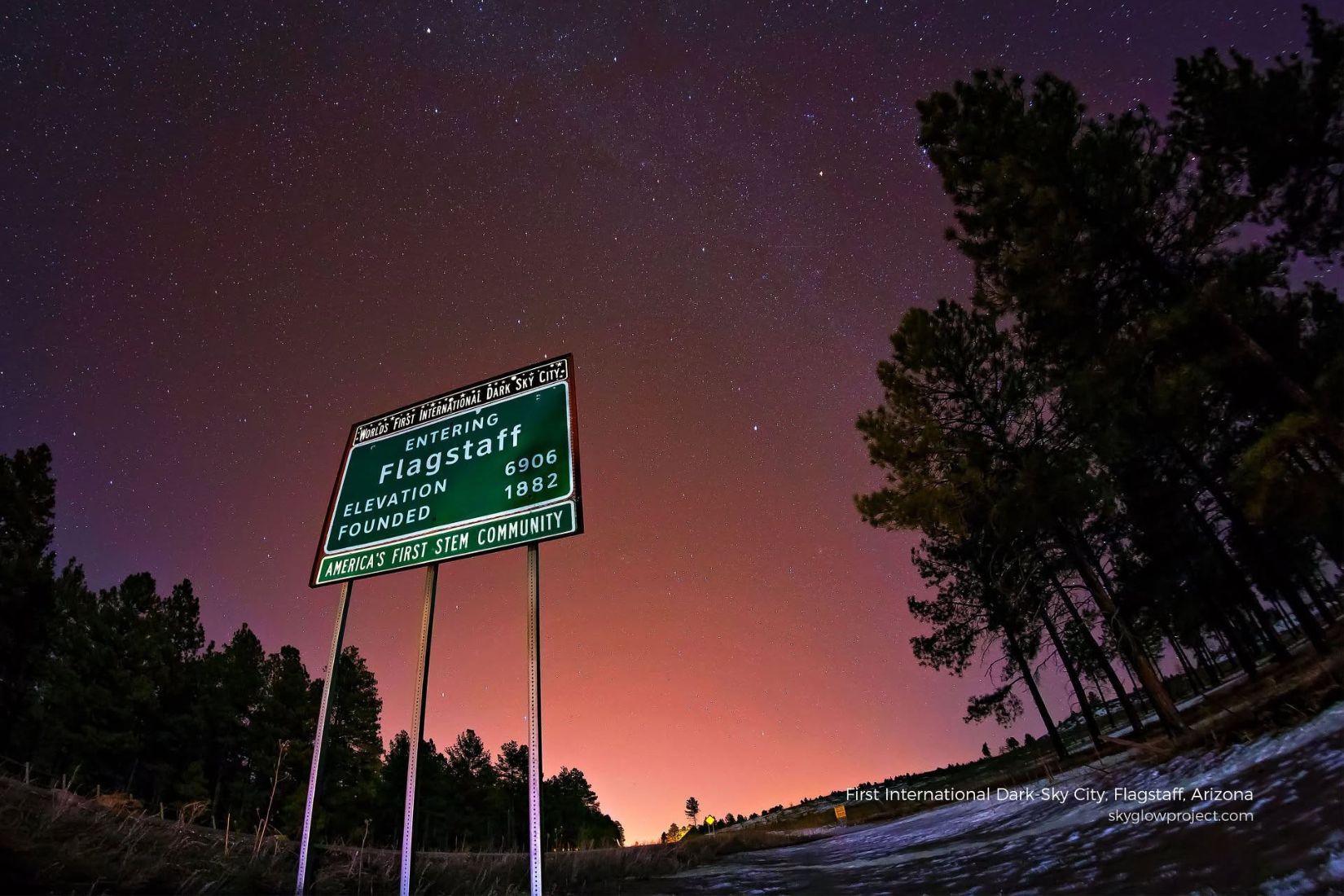

The 2001 designation launched the International Dark Sky Places program, which now protects 277 places on six continents
TUCSON, AZ, UNITED STATES, October 24, 2026 /EINPresswire.com/ — Today marks the 25th anniversary of Flagstaff’s designation as the world’s first International Dark Sky City. On Oct. 24, 2001, DarkSky International, then known as the International Dark-Sky Association, recognized the city for protecting its night sky. That designation became the foundation of the International Dark Sky Places program, which today includes 277 communities, parks, reserves and protected areas around the world.
Flagstaff’s commitment to the night began decades before the designation. By 1892, Flagstaff had been using the nickname, “Skylight City.” The city is home to Lowell Observatory, where Clyde Tombaugh discovered Pluto in 1930, and the U.S. Naval Observatory Flagstaff Station. In 1958, at the urging of local astronomers, Flagstaff banned advertising searchlights, creating the world’s first outdoor lighting ordinance designed to protect the night sky. In 1989, the city and Coconino County adopted the world’s first comprehensive outdoor lighting code, governing the spectrum, direction and output of the lights.
In 1999, three residents formed the Flagstaff Dark Skies Coalition. They worked with businesses and the local utility to replace glaring lights, then brought an idea to the International Dark-Sky Association that had never been tried: recognize an entire city for protecting its night sky. The association agreed.
“In June 2001, the Flagstaff Dark Skies Coalition proposed the creation of an ‘International Dark-Sky City’ program to encourage communities to identify dark skies as a valuable community asset and goal,” said Danielle Adams, executive director of the Flagstaff Dark Skies Coalition. “Since the first designation of Flagstaff on October 24, 2001, DarkSky International has grown that idea into a robust, successful International Dark Sky Places program.”
The idea spread quickly. In 2007, Natural Bridges National Monument in Utah became the first International Dark Sky Park. By 2016, a dozen National Park Service sites had earned certification, including Sunset Crater Volcano, Walnut Canyon, and Wupatki national monuments outside Flagstaff. Nearby communities, including Sedona, Big Park/Village of Oak Creek, Camp Verde, and Cottonwood, followed, along with Petrified Forest and Grand Canyon national parks, making northern Arizona one of the world’s densest clusters of Dark Sky Places. Today, certified places protect more than 237,167 square kilometers across Europe, Asia, Africa, Oceania, and the Americas.
“Twenty-five years ago, Flagstaff helped redefine what conservation could look like,” said Ruskin Hartley, CEO and executive director of DarkSky International. “It showed the world that natural darkness is a resource worth protecting, just like clean air and clean water.”
International Dark Sky Places commit to responsible lighting, reducing light pollution and public education. That work supports nocturnal wildlife, saves energy, preserves cultural connections to the night and has helped fuel the growth of dark sky tourism.
Flagstaff continues to lead. With a 2026 retrofit of 4,000 streetlights to narrowband amber LEDs and a naked-eye view of the Milky Way from downtown, “we remain on the leading edge of urban dark-sky protection,” Adams said.
While today marks the anniversary of the designation, Flagstaff’s 25th Anniversary Celebration event will take place in the spring to coincide with International Dark Sky Week (April 5-11, 2027), a worldwide celebration of dark skies.
About the International Dark Sky Places Program: Founded in 2001, the International Dark Sky Places Program is a non-regulatory and voluntary program encouraging communities, parks, and protected areas worldwide to preserve and protect dark sites through effective lighting policies, environmentally responsible outdoor lighting, and public education. When used indiscriminately, artificial light can disrupt ecosystems, impact human health, waste money and energy, contribute to climate change, and block our view and connection to the universe. Golden Gate Canyon State Park now joins more than 275 Places that have demonstrated robust community support for dark sky advocacy and strive to protect the night from light pollution. Learn more by visiting https://darksky.org/what-we-do/international-dark-sky-places/.
About DarkSky International: The mission of DarkSky is to preserve and protect the nighttime environment and our heritage of dark skies through environmentally responsible outdoor lighting. Learn more at darksky.org
Drew Reagan
DarkSky International
+1 (520) 293-3198
Visit us on social media:
LinkedIn
Instagram
Facebook
Legal Disclaimer:
EIN Presswire provides this news content “as is” without warranty of any kind. We do not accept any responsibility or liability
for the accuracy, content, images, videos, licenses, completeness, legality, or reliability of the information contained in this
article. If you have any complaints or copyright issues related to this article, kindly contact the author above.

Media gallery